Trampoline park safety rules: a practical checklist

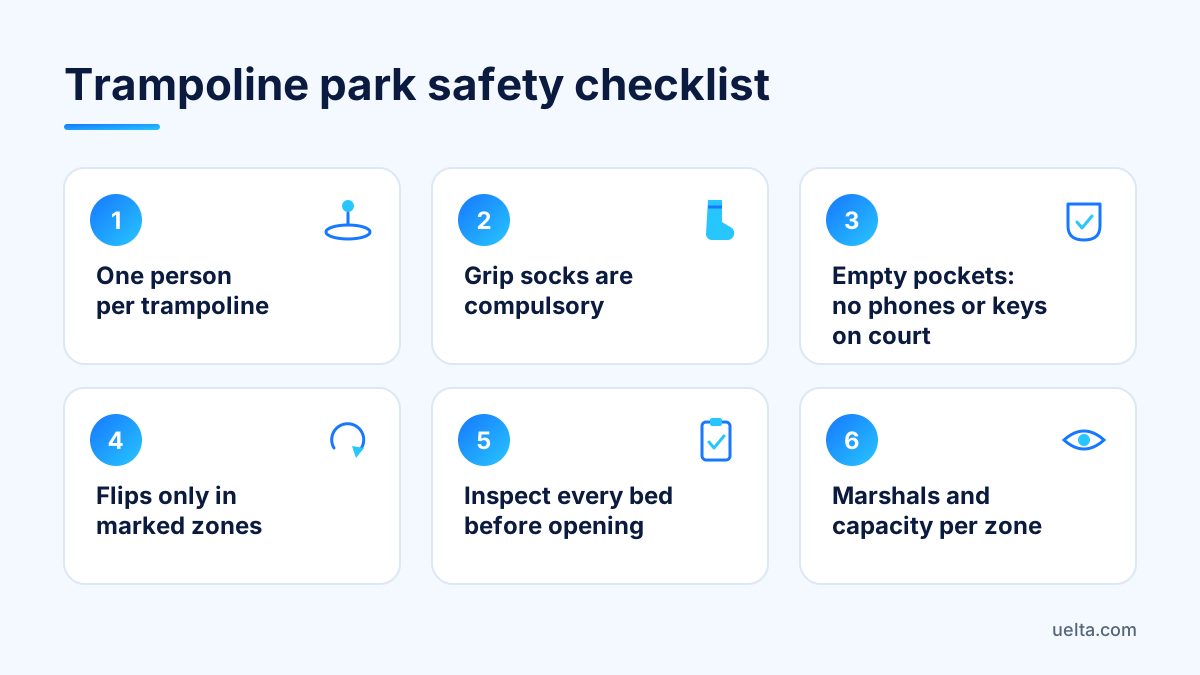
Trampoline park safety rules combine two things: the rules every jumper follows (one person per trampoline, grip socks, empty pockets and flips only in marked zones) and the checks the venue runs every day (inspecting beds before opening, marshals in every zone, capacity per session and a signed waiver). This checklist brings both together so you can put it to work on your next shift.
Trampoline park safety rules for jumpers
These are the rules that belong on your signage, your website and the waiver customers sign. The shorter and more specific they are, the better they are followed.
- One person per trampoline. Collisions and double bouncing start when two people share a bed.
- Grip socks are compulsory. No shoes, no bare feet.
- Empty pockets. Phones, keys, glasses, long earrings and chewing gum stay off court.
- Jump in the centre of the bed, never on the pads or the edges.
- Flips and somersaults only in marked zones and with a marshal's go-ahead.
- Foam pit: feet or bottom first, never head first, and climb out straight away.
- Separate by age or size: an adult and a toddler do not jump in the same zone at the same time.
- No sitting or lying on a bed while others are jumping.
- Stop at the whistle or when a marshal says so, without argument.
- Rest and drink water: tired jumpers land badly.
- Health: state who should not jump (recent injuries, pregnancy or conditions that could get worse) and have the wording checked by your legal adviser.
How to communicate the rules so they stick
A rule nobody reads protects nobody. Repeat it at four points in the customer journey:
- When booking: five or six key rules on the product page and in the confirmation email, alongside the grip sock requirement.
- When signing: the waiver includes the rules and the adult confirms they have read them, also on behalf of the children in their care. For parties, ask every family to sign before the day, not at the door.
- At reception: check the waiver and socks before the wristband goes on. Anything missing is sorted at the desk, not on court.
- Before entry: a one-minute safety briefing per session, or a looping video in the waiting area, timed with each wristband colour change.
On court, use large pictogram signs with text in your customers' languages; if you get overseas visitors, add at least one language besides English.
Daily opening checklist
Before opening, a named person walks the venue with a fixed list and signs it off. For example:
- Beds free of cuts, wear or open seams.
- Springs or bungee cords complete, with no breaks or deformation.
- Pads covering springs and frame, firmly fixed with no gaps.
- Nets and dividers taut, without holes, anchors secure.
- Foam pit blocks intact, enough fill and no lost objects inside.
- Floors and walkways dry, clear and well signed.
- Emergency exits, lighting and fire extinguishers accessible.
- First aid kit stocked and a first-aid trained person on shift.
- Radios or another alert system between court and reception working.
Any fault closes the affected bed or zone until it is repaired. Note what you found, take a photo and record who closed it and who approved reopening: if a claim comes in later, you will need that trail. On top of the daily walk-round, follow the manufacturer's maintenance schedule and the periodic inspections required by the regulations that apply to you and by your insurer; confirm which ones with your adviser.
During the session: marshals, capacity and safety stops
Risky situations mostly appear when the court is full and ages are mixed. Practical criteria for your team:
- Marshals per zone, standing, with sight of every bed they cover. At peak times they do not cover reception or clear tables.
- Capacity per zone, not just per building: the foam pit, dodgeball court or toddler area each need their own limit per session.
- Dedicated slots for little ones, with an accompanying adult if you decide so.
- Clear rotation: each wristband colour ends on time, so nobody stays on court longer than they paid for.
- Warning ladder: for rough play, double bouncing or someone sitting on a bed, stop the zone and correct it. First warning, second warning, then off the court. Make sure staff know they are allowed to enforce it.
Also write down what happens if someone gets hurt: stop the zone, give first aid, tell the duty manager, log the report with photos and call the emergency services if needed.
Common mistakes to avoid
- Rules only on one sign by the entrance that nobody reads.
- Paper waivers signed in the queue: entry slows down and sheets go missing.
- Selling more tickets than your team can supervise at peak times.
- Checking beds by eye, with no list and no record.
- Assuming the signed waiver replaces supervision. It informs and leaves a record, but it does not remove the venue's responsibility: have the wording reviewed by a legal adviser.
Frequently asked questions
What are the basic trampoline park safety rules?
One person per trampoline, grip socks, empty pockets, flips only in authorised zones, feet first into the foam pit and always following marshal instructions. On top of that, jumpers are separated by age or size.
Do jumpers have to sign a waiver?
It depends on the rules that apply to you and on what your insurer asks for, but it is common practice for an adult to sign for themselves and the children in their care. Check with your legal adviser what the wording should include.
How often should trampolines be inspected?
At the very least, a visual check every day before opening, with a list and a signed record. Add the maintenance set by the manufacturer and the inspections required by regulations and your insurer.
How many marshals does a trampoline park need?
There is no universal number: it depends on layout, zones and capacity. As a rule, each marshal should see all their beds without leaving their position.
How Uelta helps
Uelta does not replace your court team, but it takes paper and manual checks off reception so marshals can focus on supervising. The trampoline parks page shows the full flow, from booking to leaving the court.
- Digital waivers (optional Waiver module): the adult signs on their phone for themselves and their children via the QR code at reception or the link in the booking email, and receives a PDF copy. If you change the wording, you can see which version each person signed; while the same version is in force, they do not need to sign again on every visit.
- Checks at the desk: when arrival is marked, the till flags who still has to sign and which wristband colour to hand out, based on entry time and product.
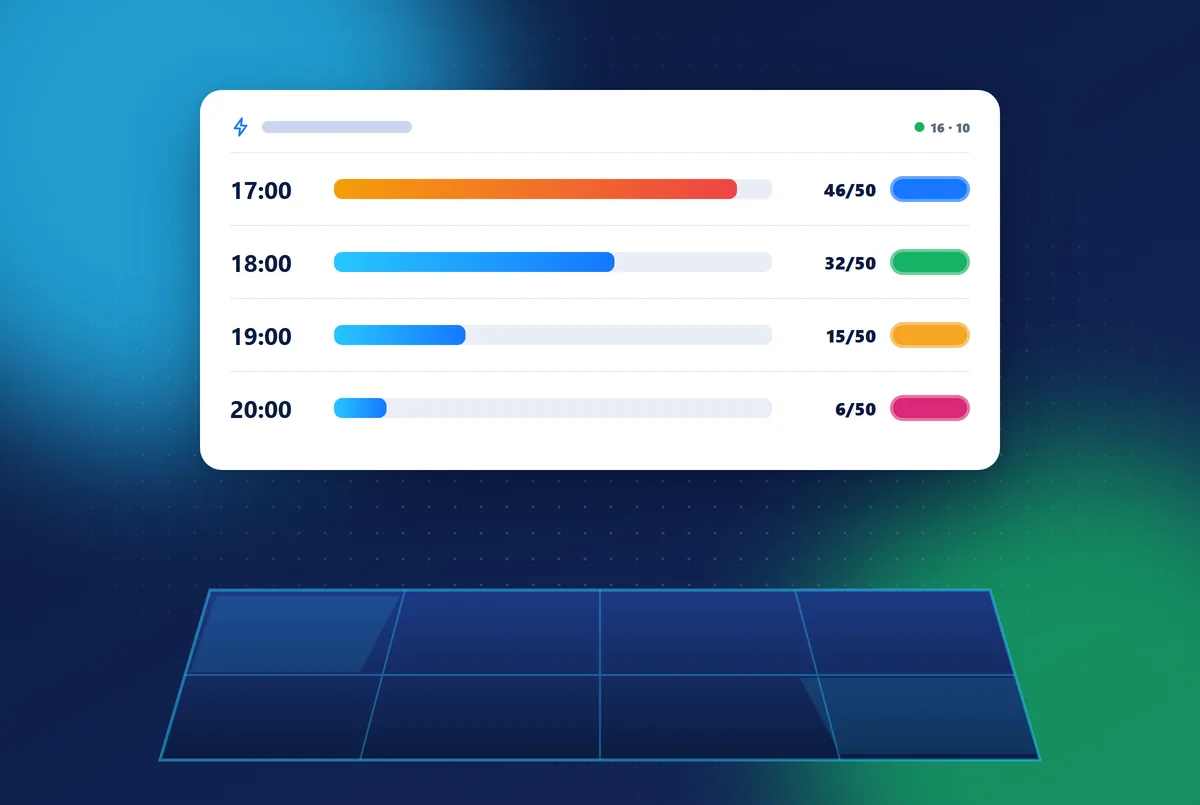
- Wristbands and capacity: places per session and capacity per zone or attraction; once full, sales stop online and at the till. A screen on the floor shows which colours are ending and when.
- Grip socks offered as an add-on when booking and at the till, so nobody reaches the court without them.
- Internal operations: with the optional Incidents and complaints module (reports with photos, manager approval, customer signature and PDF) and the optional Maintenance module (from request to sign-off, with photos and costs), every closed bed and every repair keeps its history.
Try it with your own sessions and rules: start your 7-day free trial.