Kids party themes families ask for: venue guide
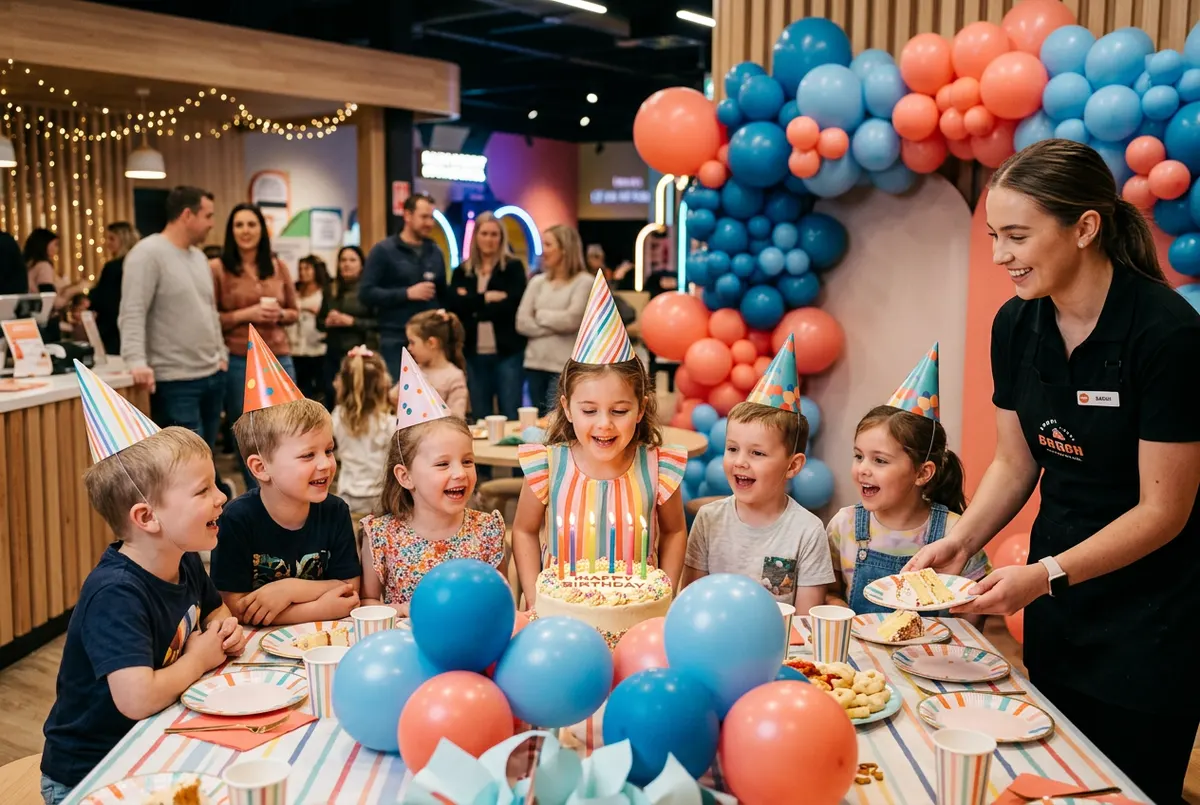
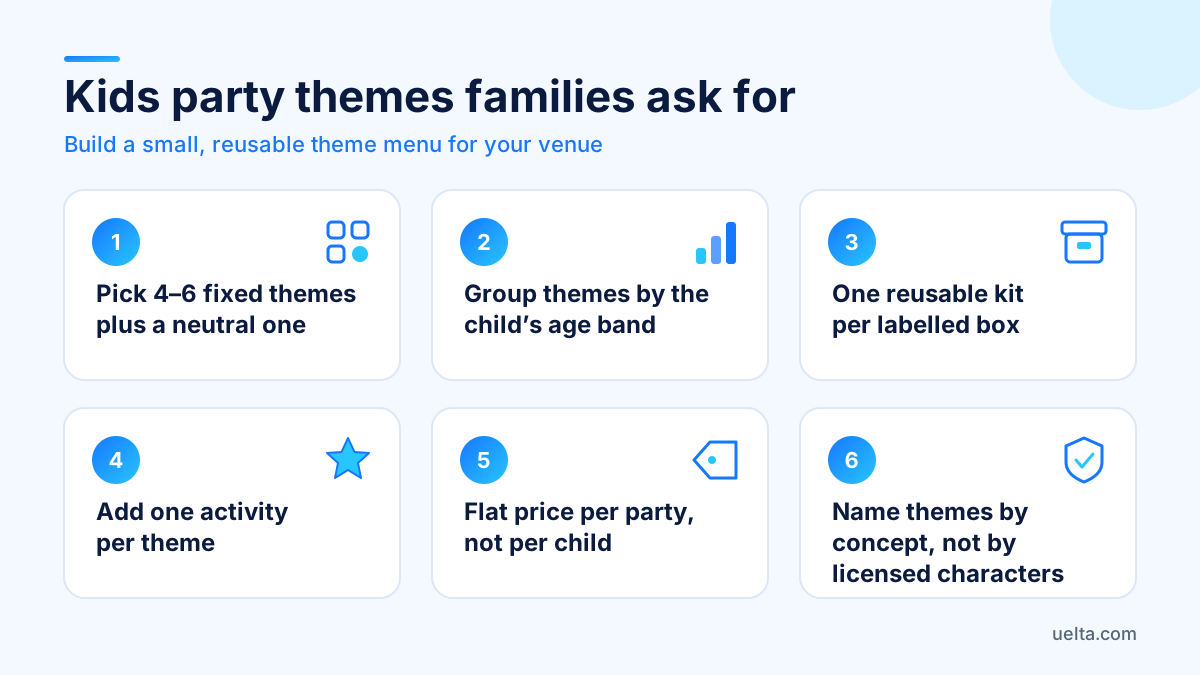
The kids party themes families ask for most are much the same in every venue: superheroes, princesses and fantasy, dinosaurs, unicorns, pirates, space, football and video-game worlds. The trick is not to offer them all but to choose four to six, build each one as a reusable kit and sell it as a clear add-on to your birthday package.
If you run a kids’ party venue, themes should raise the spend per party without adding work for your hosts.
The kids party themes families ask for most, by age
What families request depends mainly on the birthday child’s age. Planning by age band stops you storing boxes nobody chooses:
- Ages 2 to 4: animals, farm, colours and simple cartoon worlds. Soft decoration, balloons and loosely structured play.
- Ages 4 to 7: superheroes, princesses and castles, unicorns, dinosaurs, mermaids and pirates. This band asks for themes most often and cares most about dressing up and photos.
- Ages 7 to 10: football, space, science experiments, treasure hunts and video-game worlds.
- Ages 10 and up: nothing that feels babyish: neon, challenges, team or colour battles.
Seasonal themes such as Halloween, Christmas, carnival and summer only pull for a few weeks a year. And many venues forget the neutral or colour-based theme, which suits mixed-age groups and siblings sharing a party.
How to find out which themes your families want
General trends are a starting point, but your menu should come from what people ask you. For two months, collect requests methodically:
- Log every request in a list shared with the team, even for themes you do not offer.
- Review chat, phone and WhatsApp enquiries: if the same theme comes up every week, that is a clear signal.
- Ask after the party: a quick ‘which theme would you have liked?’ to the organiser tells you a lot.
- Listen to your hosts: they know which themes get children playing and which stay as decoration.
- Check against your audience’s age: if most of your parties are for 5 to 8-year-olds, do not invest in themes for older children.
Keep what repeats. A theme two families ask for in a year does not justify buying a kit.
How to build a theme menu without chaos
The costliest mistake is bespoke themes: every party becomes its own project, the team improvises and the storeroom fills with props used once. A fixed menu works far better:
- Choose four to six fixed themes covering your main age bands, plus a neutral one.
- One kit per theme in a labelled box: table runner, centrepieces, signs, photo backdrop and a contents list.
- Separate reusables from consumables: backdrops and decorations last for months; plates, cups and balloons are restocked with each order.
- One activity per theme: a pirate treasure hunt, a superhero mission or a fossil dig. Children remember what they did.
- A one-page set-up sheet with photos of the finished room, so anyone on the team sets it up the same way in the same time.
- Rotate one theme a season: retire the least requested and trial a new one. The menu stays fresh without growing.
Checklist before every themed party
- Kit complete against its list.
- Consumables counted for the confirmed number of children.
- Activity ready and host assigned.
- Themed food checked against guests’ allergies.
- Set-up and pack-down time blocked in the room schedule.
How to price and sell party themes
The clearest structure for families is a base package (play time, room and food) with the theme as an add-on. Practical criteria:
- Flat price per party, not per child: decorating costs the same for 10 guests as for 20.
- Work out the real cost: consumables, kit depreciation (what it cost divided by the parties you expect to run with it) and the extra set-up minutes.
- Include the neutral theme in the package and charge only for special themes, so your base price stays competitive.
- Offer two tiers: ‘decoration’ and ‘decoration plus activity’. Side by side, families can see what the fuller option adds.
- Show real photos of each theme set up in your own room, not stock images: they sell better and set the right expectations.
Common mistakes with party themes
- Using licensed characters without permission: decorating with well-known branded characters or advertising them by name can raise intellectual property issues. Check your case with a legal adviser; the practical route is to name themes by concept (‘superheroes’, ‘fantasy kingdoms’).
- Vague descriptions: ‘themed decoration’ on your website is not enough; list what is included to avoid disputes on the day.
- Not timing set-up: with back-to-back parties, a kit that overruns delays the next one. Time each theme and keep a fixed gap between bookings.
- Promising off-menu extras: if someone agrees on the phone to a backdrop you do not have, it will not be there on the day. Special requests always go through one responsible person.
- Unsafe materials: small parts within reach of under-threes, confetti in play areas or decorations that come loose. Review the safety rules that apply to you and take any doubts to your adviser.
Frequently asked questions
How many themes should a kids’ party venue offer?
For most venues, four to six fixed themes plus a neutral one is enough: it covers the main age bands without filling the storeroom or complicating set-up.
Should the theme be included in the party package price?
The clearest approach is to include neutral decoration and sell special themes as an add-on at a flat price per party. Your base package stays competitive.
Can I use famous cartoon characters at kids’ parties?
Licensed characters are protected by intellectual property rights, so check with a legal adviser before using them in decoration or advertising. Naming themes by concept is a simple alternative.
How far in advance should families choose the theme?
Ideally at the time of booking, with a deadline for changes, for example a week before the party. That gives you time to check the kit and order consumables.
How Uelta helps
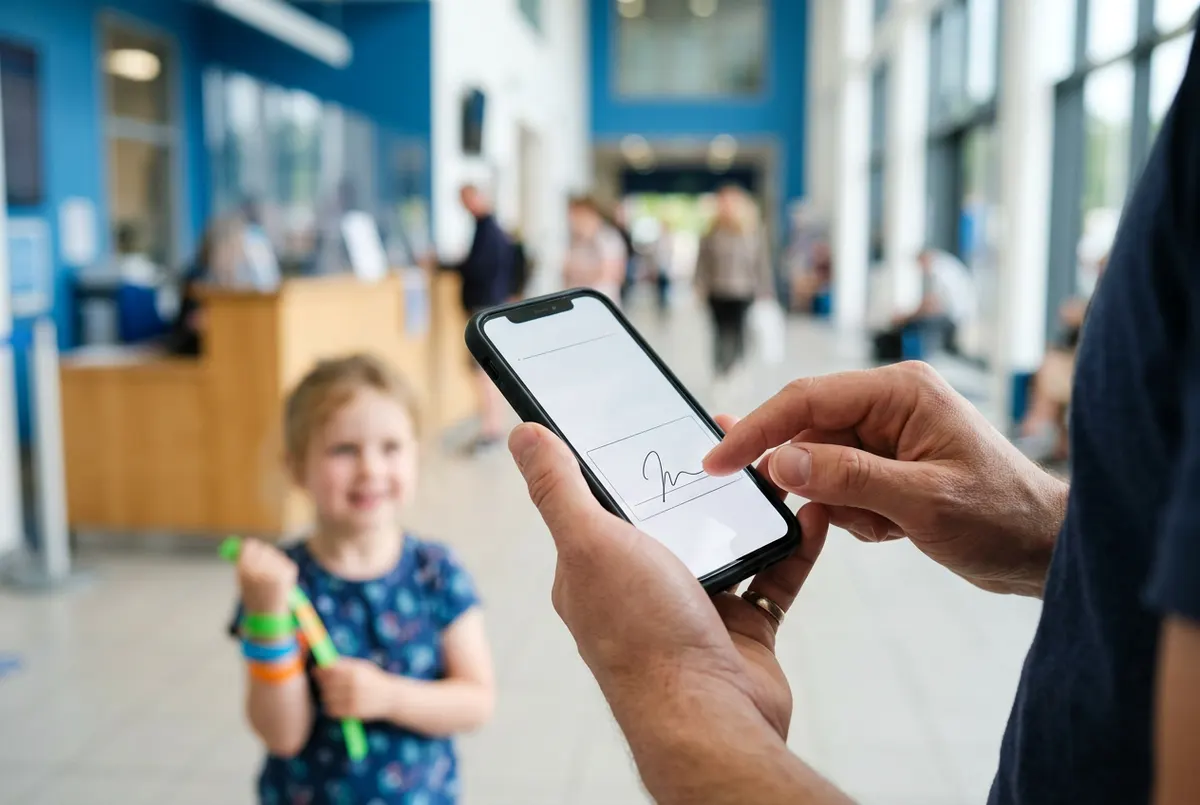
With Uelta’s birthday parties feature, the organiser books and pays for the package online and shares the invitation link on WhatsApp. Each family takes a place, signs for their child and picks sock size and food from their phone. You define the food options, so a themed menu can be one of them, and your team gets the party sheet with sizes and menus already counted and allergies flagged with ‘!’.
In your online booking shop you can sell each theme as an add-on offered while customers book, and use your own images to show real photos of every set-up.
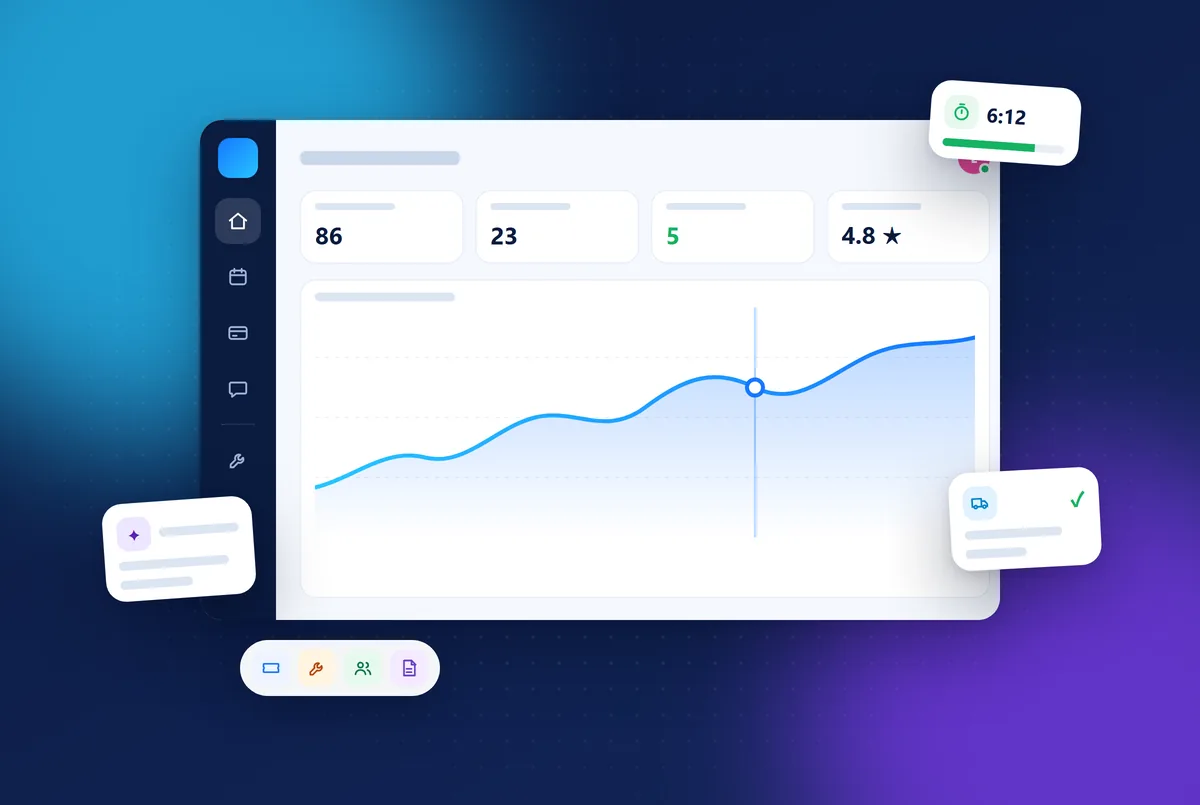
When a family asks about packages or availability on your website, the AI live chat answers with your venue’s details and passes bespoke parties to your team; those conversations also help you log which themes people want.
Build your theme menu and test it with real families: start your 7-day free trial.